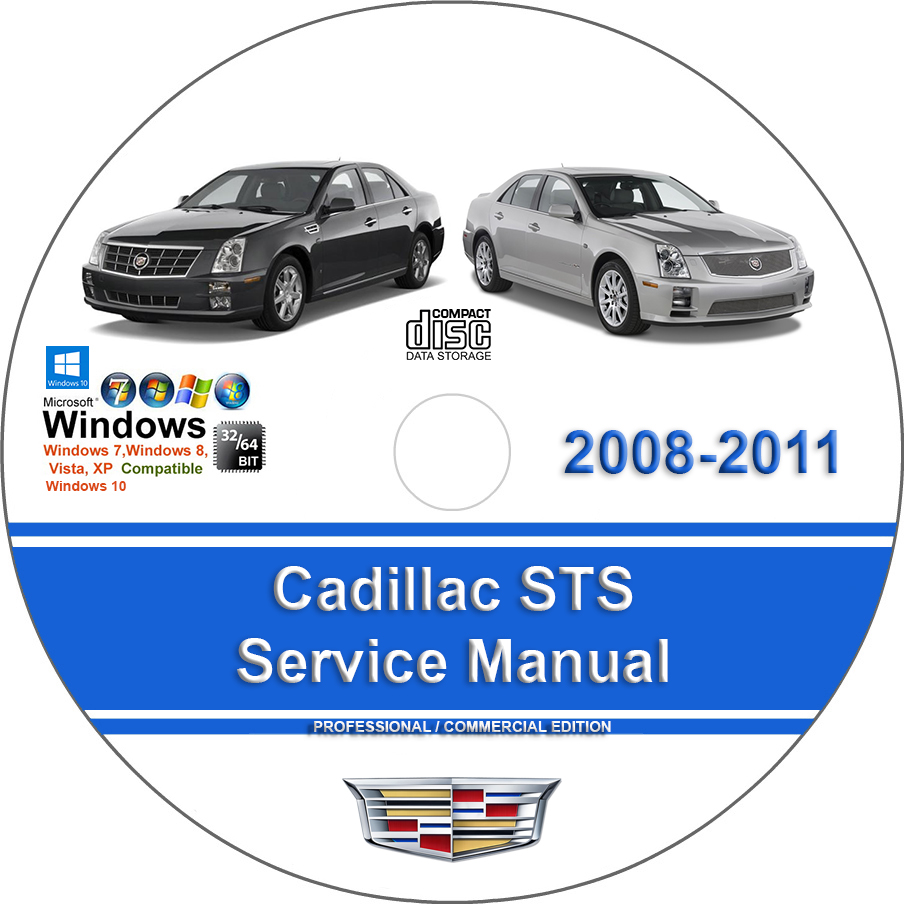
Cadillac STS 2008 2009 2010 2011 Factory Service Repair Manual + Wiring
Price range: $40.00 through $49.00
Cadillac STS 2008 2009 2010 2011 Factory Service Repair Manual + Wiring
You can download this or I can ship it to you.
Loaded with Hi Resolution illustrations, instructions, photos, and diagrams, complete to service and repair your Cadillac.
Pages: 12500+
Cadillac STS 2008 2009 2010 2011 Factory Service Repair Manual + Wiring
” Works on any computer, laptop, smartphone, iPad, iPhone, or tablet. “
Models Covered :
2008 Version Compatible with:
Cadillac STS 2008
Cadillac STS 2009
Cadillac STS 2010
Cadillac STS 2011
To keep pace with its more eye catching kin (just as other bigger extravagance sport cars), the 2008 Cadillac STS has been amended all around. It’s similar to Jan dumping her dorky glasses. The wide, two-level egg-box grille is especially striking, and the improved lodge trim will undoubtedly get the consideration of full-size extravagance vehicle customers. Most noteworthy is another base motor, a 3.6-liter V6 motor that expands power by 47 ponies and 20 pound-feet of torque contrasted with a year ago six-chamber. This force plant, presently including direct fuel infusion, not just puts more guts to the asphalt, it’s additionally more eco-friendly and has diminished discharges. It’s difficult to contend with that recipe, and thinking about that the STS V6 is essentially as speedy as the unaltered STS V8, we’d have no issue suggesting sparing a couple of bucks by going with the base motor.
Innovation is presently the name of the game while going up against enormous weapons like the Audi A6, BMW 5 Series, Infiniti M35/45 and Mercedes-Benz E-Class, and the 2008 STS includes a few cutting edge discretionary highlights to its collection to stay aware of the Joneses. The Lane Departure Warning System works like other brands’ comparative innovations, using cameras in the rearview mirrors to peruse street lines and afterward alert the driver on the off chance that he begins to wander with visual and perceptible signs. A Side Blind Zone Alert System filters for vehicles in the driver’s vulnerable side and flashes a golden light in the rearview mirrors. A few drivers may discover these “caretaker advances” bothering, however with such huge numbers of in-vehicle driver interruptions these days, it’s difficult to deny their helpfulness.
Manual Covers :
Accessories and Equipment:
Bolted Exterior Body Panels and Closures
Bumpers and Fascia
Cellular, Entertainment, and Navigation
Cruise Control
Data Communications
Displays and Gages
Exterior Trim
Fixed and Moveable Windows
Floor Coverings and Headlining
Frame and Underbody
Horns
Immobilizer
Instrument Panel and Console Trim
Interior Trim and Paneling
Lighting
Mirrors
Object Detection
Power Outlets
Power Seats
Programming and Setup
Remote Functions
Seat Hardware, Trim, and Upholstery
Seat Heating and Cooling
Secondary and Configurable Customer Controls
Sunroof
Theft Deterrent
Vehicle Access
Wipers and Washers
Ateq Tpms Reset Procedure:
Ateq Tpms Reset Procedure
Automatic Stop/Start Disable:
Automatic Stop/Start Disable
Bartec Tpms Reset Procedure:
Bartec Tpms Reset Procedure
Brakes:
Antilock Brake System
Disc Brakes
Hydraulic Brakes
Park Brake
Cabin Air Filter:
Cabin Air Filter
Canadian Model Reference:
Canadian Model Reference
Collision:
Paint and Coatings
Diagnostic Connector Locations:
Diagnostic Connector Locations
Driveline and Axle:
Front Drive Axle
Propeller Shaft
Rear Drive Axle
Wheel Drive Shafts
DTC Index:
DTC Index
EGR Function Testing:
EGR Function Testing
Electrical:
Accessory Power Socket
Electrical Center Identification Views
Diagnostic Starting Point
DTC B1385 To B1422
DTC B1440
Fuses & Circuit Breakers
Luggage Compartment/Rear of Vehicle Component Views
Master Electrical Component List
Passenger Compartment/Roof Component Views
Powertrain Component Views
Service, Repair, Troubleshooting and Diagnosis
Splice Pack Connector End Views
Electrical Component Locations:
Electrical Component Locations
Emission:
Applications
Control Abbreviations
Engine Controls and Fuel:
3.6L (LLT) – (Introduction 1 of 2)
3.6L (LLT) – (Introduction 2 of 2)
3.6L (LLT) – DTC P0008 To P0193
3.6L (LLT) – DTC P0201 To DTC P0700
3.6L (LLT) – DTC P0856
3.6L (LLT) – Troubleshooting and Diagnosis
4.4L – Introduction
4.4L – DTC P0010 To P0158
4.4L – DTC P0153 To P0651
4.4L – DTC P0650 To P2544
4.4L – Troubleshooting and Diagnosis
4.6L (LH2) – Introduction
4.6L (LH2) – DTC P0010 To P0315
4.6L (LH2) – DTC P0335 To P2544
4.6L (LH2) – Troubleshooting and Diagnosis
Engine:
Engine Cooling
Engine Electrical
Engine Exhaust
Engine Mechanical – 3.6L – Introduction
Engine Mechanical – 3.6L – ON-VEHICLE REPAIR INSTRUCTIONS (1 OF 2)
Engine Mechanical – 3.6L – ON-VEHICLE REPAIR INFORMATION (2 OF 2)
Engine Mechanical – 3.6L – OFF-VEHICLE REPAIR INSTRUCTIONS
Engine Mechanical – 3.6L – OFF-VEHICLE REPAIR INSTRUCTIONS
Engine Mechanical – 3.6L – OFF-VEHICLE REPAIR INSTRUCTIONS
Engine Mechanical – 4.4L – Introduction
Engine Mechanical – 4.4L – ON-VEHICLE REPAIR INSTRUCTIONS (1 OF 2)
Engine Mechanical – 4.4L – ON-VEHICLE REPAIR INSTRUCTIONS (2 OF 2)
Engine Mechanical – 4.4L – OFF-VEHICLE REPAIR INSTRUCTIONS
Engine Mechanical – 4.4L – OFF-VEHICLE REPAIR INSTRUCTIONS
Engine Mechanical – 4.4L – OFF-VEHICLE REPAIR INSTRUCTIONS
Engine Mechanical – 4.6L (LH2) – Introduction
Engine Mechanical – 4.6L (LH2) – ON-VEHICLE REPAIR INSTRUCTIONS (1 OF 2)
Engine Mechanical – 4.6L (LH2) – ON-VEHICLE REPAIR INSTRUCTIONS (2 OF 2)
Engine Mechanical – 4.6L (LH2) – OFF-VEHICLE REPAIR INSTRUCTIONS
Engine Mechanical – 4.6L (LH2) – OFF-VEHICLE REPAIR INSTRUCTIONS
Engine Mechanical – 4.6L (LH2) – OFF-VEHICLE REPAIR INSTRUCTIONS
Engine Performance:
Firing Order & Cylinder Identification
Mode 6
General Information:
Air Wind Noise
Anti-Lock Brake Safety Precautions
Clutch Trouble Shooting
Commonly Used Abbreviations
Drive Axle Noise Diagnosis
Electrostatic Discharge (ESD) Warning – Basic Information
Engine Displacement Conversion Table
Engine Overhaul Procedures
Engine Performance Diagnostic Routine Outline
Engine Performance Safety Precautions
English-Metric Conversion Chart
Gear Tooth Contact Patterns
General Cooling System Service
General Information
Maintenance and Lubrication
Manual Transmission Trouble Shooting
Parasitic Load Explanation & Test Procedures
Squeaks and Rattles
State Emission Standards – Gasoline
State Emission Standards
Symptom Check List Worksheets
Trouble Shooting – Basic Procedures
TROUBLE SHOOTING
Using Wiring Diagrams
Vehicle Diagnostic Information
Vibration Diagnosis and Correction
Warnings and Cautions
Water leaks
Waveforms – Injector Pattern Tutorial
Wheel Alignment Theory & Operation
HVAC:
Heating, Ventilation, and Air Conditioning
HVAC – Automatic
OBD-II Readiness Monitors:
2.8L, 3.0L, 3.2L & 3.6L – 2008
4.4L – 2006-09
4.6L (LH2) – 2007-10
Reminder Indicator Reset Procedures:
Reminder Indicator Reset Procedures
Restraints:
Seat Belts
Supplemental Inflatable Restraints
Specifications Index:
Specifications Index
Steering:
Power Steering
Steering Wheel and Column
Suspension:
Automatic Level Control
Electronic Suspension Control
Front Suspension
Rear Suspension
Suspension General Diagnosis
Tire Pressure Monitoring
Tires and Wheels
Wheel Alignment
System Wiring Diagrams:
Wiring Diagrams
Tire Pressure Monitor Systems:
Tire Pressure Monitor Systems
Traction Control:
4WD and AWD
Transmission:
Automatic Transmission – 6L50/6L80/6L90 – Introduction (1 of 2)
Automatic Transmission – 6L50/6L80/6L90 – Introduction (1 of 2)
Automatic Transmission – 6L50/6L80/6L90 – DTC P0218 To P0974
Automatic Transmission – 6L50/6L80/6L90 – DTC P0977 To P2764
Automatic Transmission – 6L50/6L80/6L90 – Removal and Installation, Service, Overhaul, Troubleshooting and Diagnosis
Shift Lock Control
Transfer Case – BW 4479
Uniform Inspection and Communication:
Brake Systems
Drive Train & Transmission Systems
Electrical Systems
Engine Performance And Maintenance
Exhaust Systems
Heating, Ventilation And Air Conditioning Systems
Routine Inspection Reference Guide
Steering & Suspension Systems
This manual is the same as the manual used by workshops. Service Manual contains detailed instructions and step by step diagrams for all workshop procedures.
Language: English
Format: PDF
COMPATIBLE WITH ALL WINDOWS & MAC COMPUTERS
(WINDOWS 10, WINDOWS 8, WINDOWS 11, ETC.)
Windows/Mac/Tablet/Phone Friendly
- Factory Information – Accurate repair procedures, specifications, service information tailored to your vehicle.
- Permanent Ownership – No subscriptions, recurring fees, or expiration dates. Buy it once and keep it forever.
- No Software Required – Works with any standard PDF reader on Windows, Mac, smartphones, and tablets.
- Flexible Storage Options – Save your manual to a USB drive, CD, DVD, cloud storage, Dropbox, computer, or mobile device.
- Print-Friendly Format – Print the entire manual or only the pages needed for a specific repair.
- Portable & Convenient – Compact PDF files make storage and access simple from virtually any device.
- 3.6L Direct-Injection (DI) V6: 302 hp / 272 lb-ft torque. Introduced in 2008, this modern engine actually produces more horsepower than older versions of the V8 while delivering much better fuel economy (around 17 mpg city / 26 mpg highway).
- 4.6L Northstar V8: 320 hp / 315 lb-ft torque. Available from 2008 to 2010. It offers a classic, smooth V8 rumble and muscle-car passing power, but has a thirstier profile (15 mpg city / 24 mpg highway).
- Transmission: Both engines are mated to a highly reliable, smooth-shifting 6-speed automatic transmission (6L50 or 6L80).
- Drivetrain: Standard RWD for sporty driving dynamics, with optional AWD available for better winter traction.
- 2008: The major mid-cycle refresh year. Cadillac updated the exterior with a larger, bolder mesh grille, side fender vents inspired by the Escalade, and a significantly upgraded interior with better dashboard materials.
- 2009: The active safety suite expanded, introducing standard Bluetooth connectivity and optional side blind-zone alert systems.
- 10th Anniversary Edition (2009): A highly rare trim package featuring an exclusive Crystal Claret exterior paint color, unique split-spoke wheels, and a specialized premium leather interior.
- 2010: The final year you could order the 4.6L Northstar V8 engine.
- 2011: The final model year for the STS. The V8 was dropped entirely, leaving the 3.6L V6 as the sole engine choice before the vehicle was officially replaced by the Cadillac XTS.
- Performance / Luxury Collections: Upgraded standard features to include heated/ventilated front seats, a heated steering wheel, real eucalyptus wood trim, and a premium 15-speaker Bose Studio Surround Sound system.
- Magnetic Ride Control (MRC): Available via the performance packages, this highly praised suspension continuously adjusts shock dampening in milliseconds, allowing the heavy sedan to corner flatly without losing its soft, cloud-like ride quality.
- Head-Up Display (HUD): Projects vehicle speed and audio data directly onto the lower windshield so you never have to take your eyes off the road.
- 3.6L V6 Timing Chain Stretch: The 3.6L High Feature engine is notorious for prematurely stretching its timing chains, often caused by running low on engine oil or following long oil change intervals. Listen closely for a rattling noise from the front of the engine during a cold start. If the check engine light is on for codes P0008, P0009, P0016, or P0017, the chains likely need an expensive replacement.
- Northstar V8 Oil Leaks: By 2008, GM fixed the infamous cylinder head bolt stripping issues that plagued older 1990s Northstar engines. However, these late-model V8s are still highly prone to oil leaks from the oil pan gasket and the split-crankcase half-case seals, which require removing the engine to fix properly.
- AWD Front Differential Failure: On all-wheel-drive configurations, the front differential seals can fail over time, slowly weeping gear oil out until the differential runs dry and whines or seizes. Check underneath the front axles for oily residue.
| Medium | USB Flash Drive, DVD, Download |
|---|
Related products