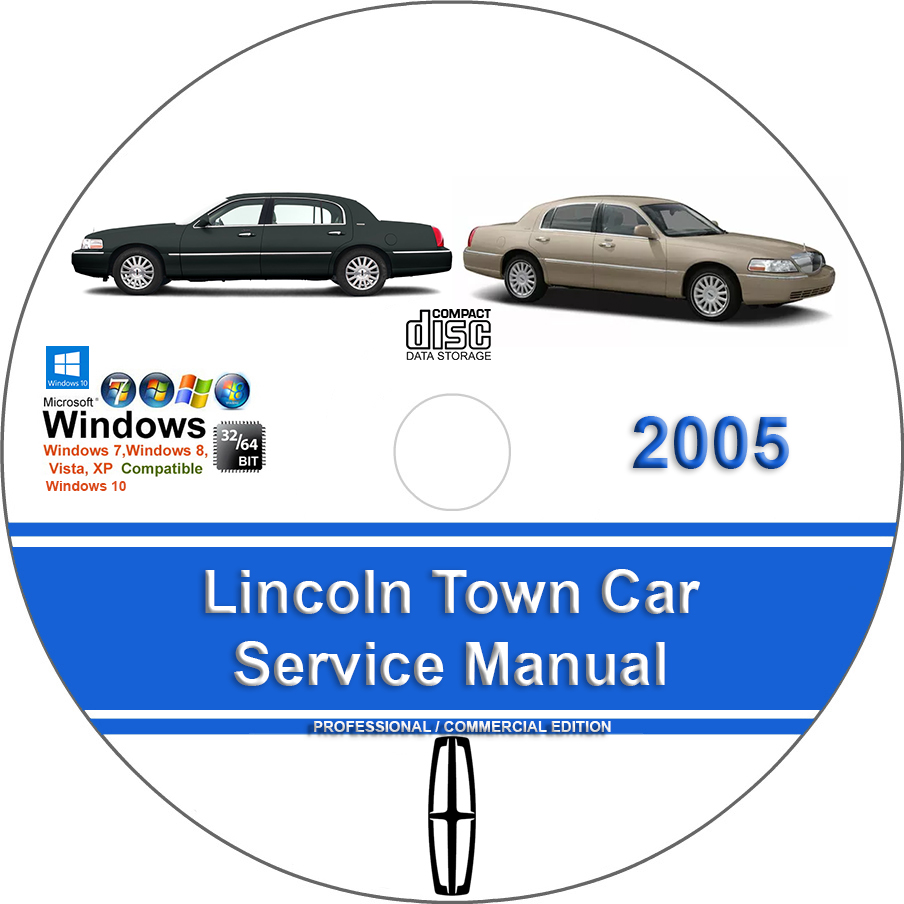
Lincoln Town Car 2005 Factory Service Repair Manual + Wiring
Price range: $40.00 through $49.00
Lincoln Town Car 2005 Factory Service Repair Manual + Wiring
You can download this or I can ship it to you.
Loaded with Hi Resolution illustrations, instructions, photos, and diagrams, complete to service and repair your Lincoln.
Pages: 6500+
Lincoln Town Car 2005 Factory Service Repair Manual + Wiring
” Works on any computer, laptop, smartphone, iPad, iPhone, or tablet. “
Models Covered :
Lincoln Town Car 2005
An extend from 2004, the Town Car is a full-size extravagance vehicle with seating limit with respect to up to six-travelers. Offered in four trim levels, signature, signature restricted, signature L and originator and all models include a 4.6-liter V8 motor that produces 239 pull connected to a four-speed programmed transmission.
Manual Covers :
Accessories & Equipment:
Antenna
Anti-Theft – PATS
Anti-Theft – Perimeter
Audio Unit
Body Closures
Body System – General Information
Bumpers
Clock
Component Testing
Daytime Running Lamps
Exterior Lighting
Exterior Trim and Ornamentation
Front End Body Panels
Full Frame and Body Mounting
Glass, Frames and Mechanisms
Handles, Locks, Latches and Entry Systems
Horn
Information and Message Center
Instrument Cluster
Instrument Cluster and Panel Illumination
Instrument Panel and Console
Interior Lighting
Interior Trim and Ornamentation
Module Communications Network
Module Configuration
Multifunction Electronic Modules
Navigation System
Parking Aid
Passive Anti-Theft System Job Aid – Ford Lincoln Mercury Vehicles
Rear View Mirrors
Remote Convenience
Remote Entry Transmitter Programming Procedures – All Models
Roof Opening Panel
Seating
Speakers
Speed Control
Steering Column Switches
Warning Devices
Wipers and Washers
Automatic Stop/ Start Disable:
Automatic Stop/ Start Disable
Brakes:
Anti-Lock Control
Front Disc Brake
Hydraulic Brake Actuation
Parking Brake & Actuation
Power Brake Actuation
Rear Disc Brake
Canadian Model Reference:
Canadian Model Reference
Diagnostic Connector DLC Locations:
Diagnostic Connector DLC Locations
Driveline / Axles:
Driveshaft
Rear Drive Axle Differential – Ford 8.8-Inch Ring Gear
DTC Index:
DTC Index
EGR Function Testing:
EGR Function Testing
Electrical:
Battery, Mounting and Cables
Connector Views
Fuse and Relay Information
Generator and Regulator
Electrical Component Locations:
Electrical Component Locations
Emission:
Applications
Control Abbreviations
Engine:
Accessory Drive
Engine
Engine Cooling
Engine Ignition
Exhaust System
Fuel Tank & Lines
Starting System
Engine Performance:
Acceleration Control
Description & Operation
Diagnostic Methods
Electronic Engine Controls
Engine Emission Control
Evaporative Emissions
Firing Order & Cylinder Identification
Fuel Charging & Controls
Fuel Pressure Specifications
Intake Air Distribution & Filtering
Introduction
Mode 6
Pinpoint Test
Powertrain DTC Charts and Descriptions
Reference Values
Symptom Charts
General Information:
Anti-Lock Brake Safety Precautions
Brake System-General Information
Charging System – General Information
Climate Control System-General Information
Clutch Trouble Shooting
Commonly Used Abbreviations
Drive Axle Noise Diagnosis
Driveline System-General Information
Electrostatic Discharge (ESD) Warning – Basic Information
Engine Displacement Conversion Table
Engine Overhaul Procedures
Engine Performance Diagnostic Routine Outline
Engine Performance Safety Precautions
Engine System-General Information
English-Metric Conversion Chart
Entertainment System – General Information
Fuel System-General Information
Gear Tooth Contact Patterns
General Cooling System Service
Identification Codes
Jacking & Lifting
Manual Transmission Trouble Shooting
Noise, Vibration & Harshness
Parasitic Load Explanation & Test Procedures
State Emission Standards – Gasoline
State Emission Standards
Steering System-General Information
Suspension System-General Information
Symptom Check List Worksheets
Trouble Shooting – Basic Procedures
TROUBLE SHOOTING
Using Wiring Diagrams
Waveforms – Injector Pattern Tutorial
Wheel Alignment Theory & Operation
HVAC:
Air Conditioning
Air Distribution & Filtering
Control Components
Heating & Ventilation
OBD-II Readiness Monitors:
OBD-II Readiness Monitors
Reminder Indicator (RESET PROCEDURES):
Reminder Indicator (RESET PROCEDURES)
Restraints:
Safety Belt System
Supplemental Restraint System
Specifications Index:
Specifications Index
Steering:
Power Steering
Steering Column
Suspension:
Front Suspension
Rear Suspension
Vehicle Dynamic Suspension
Wheels & Tires
System Wiring Diagrams:
Wiring Diagrams
Traction Control:
4WD and AWD
Transmissions:
Automatic Transaxle Transmission
Automatic Transaxle Transmission External Controls
Transaxle Transmission Cooling
Uniform Inspection & Communication Standards:
Brake Systems
Drive Train & Transmission Systems
Electrical Systems
Engine Performance And Maintenance
Exhaust Systems
Heating, Ventilation And Air Conditioning Systems
Routine Inspection Reference Guide
Steering & Suspension Systems
This manual is the same as the manual used by workshops. Service Manual contains detailed instructions and step by step diagrams for all workshop procedures.
Language: English
Format: PDF
COMPATIBLE WITH ALL WINDOWS & MAC COMPUTERS
(WINDOWS 10, WINDOWS 8, WINDOWS 11, ETC.)
Windows/Mac/Tablet/Phone Friendly
- Factory Information – Accurate repair procedures, specifications, service information tailored to your vehicle.
- Permanent Ownership – No subscriptions, recurring fees, or expiration dates. Buy it once and keep it forever.
- No Software Required – Works with any standard PDF reader on Windows, Mac, smartphones, and tablets.
- Flexible Storage Options – Save your manual to a USB drive, CD, DVD, cloud storage, Dropbox, computer, or mobile device.
- Print-Friendly Format – Print the entire manual or only the pages needed for a specific repair.
- Portable & Convenient – Compact PDF files make storage and access simple from virtually any device.
- Engine: 4.6-liter Modular V8 producing 239 horsepower and 287 lb-ft of torque.
- Transmission: 4-speed automatic overdrive (4R75E).
- Fuel Economy: Roughly 15 city / 23 highway MPG.
- Dimensions: Six-passenger seating with a cavernous 21.1 cubic feet of trunk space.
- The Last “Classic” Dashboard: Unlike the 2006–2011 models that received an updated instrument cluster with a prominent digital speedometer, the 2005 model retains the older dashboard aesthetic. It features an analog speedometer directly in the center, flanked by small digital readouts for the trip computer and odometer on the side.
- The Final Year for the “Ultimate” Trim: In 2005, Lincoln still utilized the Ultimate and Ultimate L trim designations. In 2006, these high-end packages were permanently renamed “Signature Limited” and “Signature L.”
- Advanced Hydroformed Frame: The 2005 model benefits from the massive frame and suspension upgrades Ford introduced in 2003, including a hydroformed front frame section and rack-and-pinion steering, giving it a much more composed and stable highway ride than pre-2003 Town Cars.
- Signature: The well-appointed entry tier featuring premium leather seating, dual-zone automatic climate control, and rear parking sensors.
- Signature Limited: Upgrades the experience with memory settings for the driver’s seat, steering wheel, and pedals, alongside heated front seats and an upgraded sound system.
- Ultimate: The top-of-the-line luxury tier for 2005, boasting a power-closing trunk lid, unique wheels, and premium interior trim.
- Ultimate L: The long-wheelbase variant. It stretches the car by six inches to provide limousine-like rear legroom, rear-seat climate and audio controls, and heavily reinforced suspension components.
- The Plastic Intake Manifold: The 2005 models feature a composite plastic intake manifold. Over time, the plastic behind the alternator bracket or near the coolant crossovers can crack, leading to sudden coolant leaks and engine overheating.
- Air Suspension Leaks: Like all late-model Town Cars, the rear rubber air springs dry rot and leak with age, causing the car to sag after sitting overnight.
- Dual-Zone Climate Blend Doors: If the air conditioning blows freezing cold on the passenger side but scorching hot on the driver’s side, the internal plastic blend door actuators have failed. Replacing them is inexpensive for the part but requires removing the entire dashboard.
| Medium | USB Flash Drive, DVD, Download |
|---|
Related products