
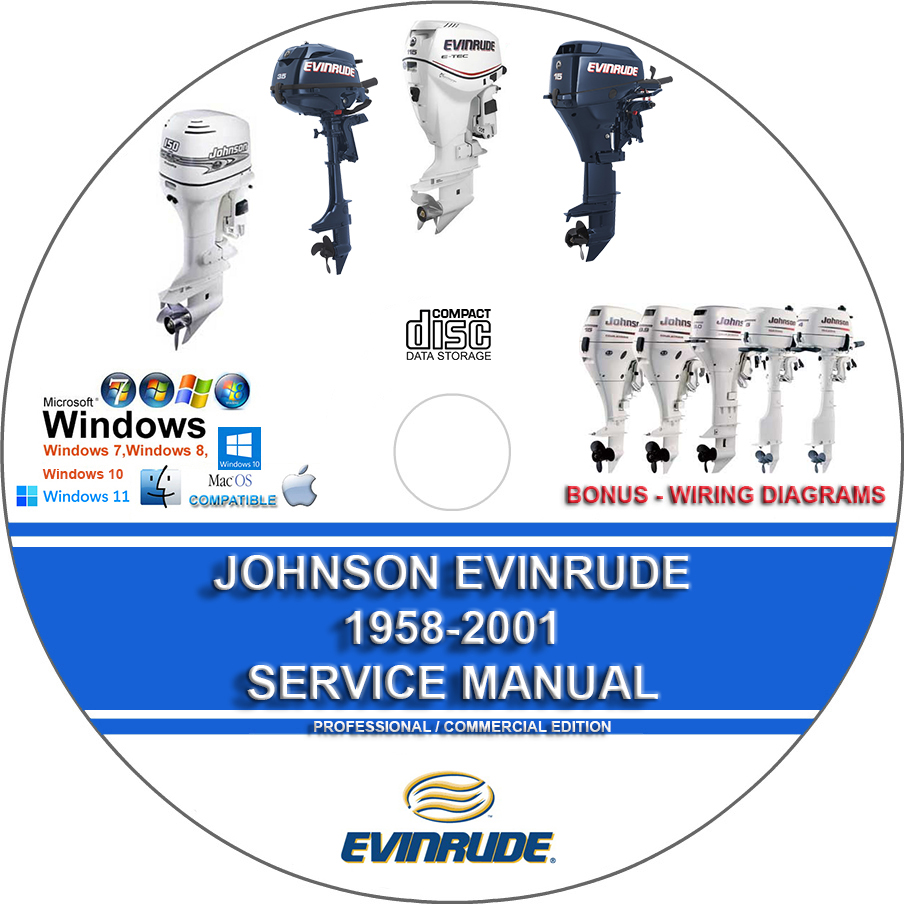
Johnson Evinrude Outboard 1968 1969 1970 1971 1972 1973 1974 1975 1976 1977 1-300 HP Factory Service Repair Manual
Price range: $42.00 through $51.00
Johnson Evinrude Outboard 1968 1969 1970 1971 1972 1973 1974 1975 1976 1977 1-300 HP Factory Service Repair Manual
You can download this or I can ship it to you.
Loaded with Hi Resolution illustrations, instructions, photos, and diagrams, complete to service and repair your JOHNSON EVINRUDE.
Johnson Evinrude Outboard 1968 1969 1970 1971 1972 1973 1974 1975 1976 1977 1-300 HP Factory Service Repair Manual
1958-2001
1.5 – 300 Horsepower
Loaded with illustrations, instructions, photos, and diagrams, complete to service and repair your JOHNSON EVINRUDE.
” Works on any computer, laptop, smartphone, iPad, iPhone, or tablet. “
Years Included:
1958 1959 1960 1961 1962 1963 1964 1965 1966 1967 1968 1969 1970 1971 1972 1973 1974 1975 1976 1977 1978 1979 1980 1981 1982 1983 1984 1985 1986 1987 1988 1989 1990 1991 1992 1993 1994 1995 1996 1997 1998 1999 2000 2001
Includes:
2 & 4 Stroke
1Cyl – 8Cyl
And Jet Drives
All Systems
All Models
Manual Covers:
- General maintenance
- Engine overhaul/Service and repair
- Controls, Final Drive
- Exhaust systems
- Ignition and starting/Charging
- Fuel systems
- Cooling and Lubrication
- Specifications and adjustments
- Transmission overhaul/repair
- Very Detailed Script With Diagrams Specs. & Lots Of Photos. Print Out One Page Or A Whole Reference. All Systems Right Down To The Wire Colors
This manual is the same as the manual used by workshops. Service Manual contains detailed instructions and step by step diagrams for all workshop procedures.
Language: English
Format: PDF – Indexed and Searchable
COMPATIBLE WITH ALL WINDOWS & MAC COMPUTERS
(WINDOWS 11, WINDOWS 10, WINDOWS 8, ETC.)
Windows/Mac/Tablet/Phone Friendly
- Factory Information – Accurate repair procedures, specifications, service information tailored to your vehicle.
- Permanent Ownership – No subscriptions, recurring fees, or expiration dates. Buy it once and keep it forever.
- No Software Required – Works with any standard PDF reader on Windows, Mac, smartphones, and tablets.
- Flexible Storage Options – Save your manual to a USB drive, CD, DVD, cloud storage, Dropbox, computer, or mobile device.
- Print-Friendly Format – Print the entire manual or only the pages needed for a specific repair.
- Portable & Convenient – Compact PDF files make storage and access simple from virtually any device.
- Models: 1.5, 2, 4, 6, 9.5, 10, 15, 20, and 25 HP.
- Technology: Lightweight, highly portable two-cylinder cross-flow engines. The low-profile 9.5 HP carried through until 1973, when it was replaced by the significantly updated and smoother 9.9 HP and 15 HP blocks in 1974. These 1974+ models introduced standard top-mounted twist-grip throttles.
- Models: 2-cylinder (40/50 HP), 3-cylinder (55/60/65/70/75 HP), and 90-degree V4 blocks (85/115/135/140 HP).
- Technology: The 3-cylinder “Loop-Charged” models introduced a highly efficient induction system that boosted top-end power. The V4 blocks were the absolute backbones of the recreational boating boom, transitioning heavily into standard mechanical shifting by 1973.
- Models: 150, 175, and 200 HP V6 configurations.
- Technology: In 1976, OMC introduced its first 90-degree V6 outboards. These engines brought immense torque and reliable performance to larger offshore boats, utilizing a massive dual-stage fuel delivery system and establishing the foundation for the later saltwater workhorses.
- The Rise of Solid-State Ignition (CDI): In the late 1960s and early 1970s, OMC phased out mechanical breaker points under the flywheel. They introduced Capacitive Discharge Ignition (CDI) systems utilizing an external electronic “power pack” box. This eliminated point wear and allowed for much hotter, more reliable spark delivery.
- Hydro-Electric Drive (1969–1972): A short-lived evolution of the earlier pure electric-shift gearcase. This system used an internal hydraulic pump inside the lower unit that was controlled by electrical solenoids. It default-shifted into forward gear if electrical power was completely lost, a built-in safety feature over previous designs.
- The Return to Mechanical Shift (1973): Due to the complexity and repair costs of the Hydro-Electric systems, OMC completely abandoned electric shifting across all models in 1973. They returned to a reliable, purely mechanical push-pull shift rod system that standard cables could operate.
- Hydro-Electric Drive Oil Sensitivity: If you own a 1969–1972 model equipped with Hydro-Electric shifting, it strictly requires specialized Type C (Premium Blend) marine gear oil. Using standard, thick 80W-90 gear lube will jam the internal hydraulic micro-valves, causing the transmission to fail to shift or get permanently stuck in forward gear.
- Early Power Pack Failures: The early generation CDI blue or black power packs were highly sensitive to heat and voltage irregularities. If the engine completely loses spark on one or all cylinders when it reaches operating temperature, the power pack is likely failing. Always check the primary grounding wire first, as a loose ground can instantly fry a new power pack.
- Thermostat and Vernatherm Failures: V4 and V6 models from this era utilize a “Vernatherm” style thermostat system to control engine temperature at idle. If these units stick open, the engine will idle too cold and heavily foul spark plugs with unburnt oil. If they stick shut, the aluminum cylinder head will rapidly warp.
- Fuel Recirculation Valve Clogging: To keep emissions clean, these engines used tiny internal check valves and rubber lines to pull puddled fuel out of the crankcase pockets and feed it back into the cylinders. If these small valves clog from sitting with old fuel, the engine will suffer a rough, sneezing idle and hesitate severely during acceleration.
| Medium | USB Flash Drive, DVD, Download |
|---|
Related products
Watercrafts/Boats
MERCURY MARINER OUTBOARD 1965 – 2000 ALL MODELS FACTORY SERVICE REPAIR WORKSHOP MANUAL
Johnson Evinrude
Johnson Evinrude
Watercrafts/Boats
Watercrafts/Boats
Mercury Two stroke 2.2 2.5 3 3.3 6 8 9.9 10 15 Mariner Factory Service Repair Manual + Wirings
Johnson Evinrude
Johnson Evinrude Outboard 1998 1999 2000 2001 1-300 HP Factory Service Repair Manual